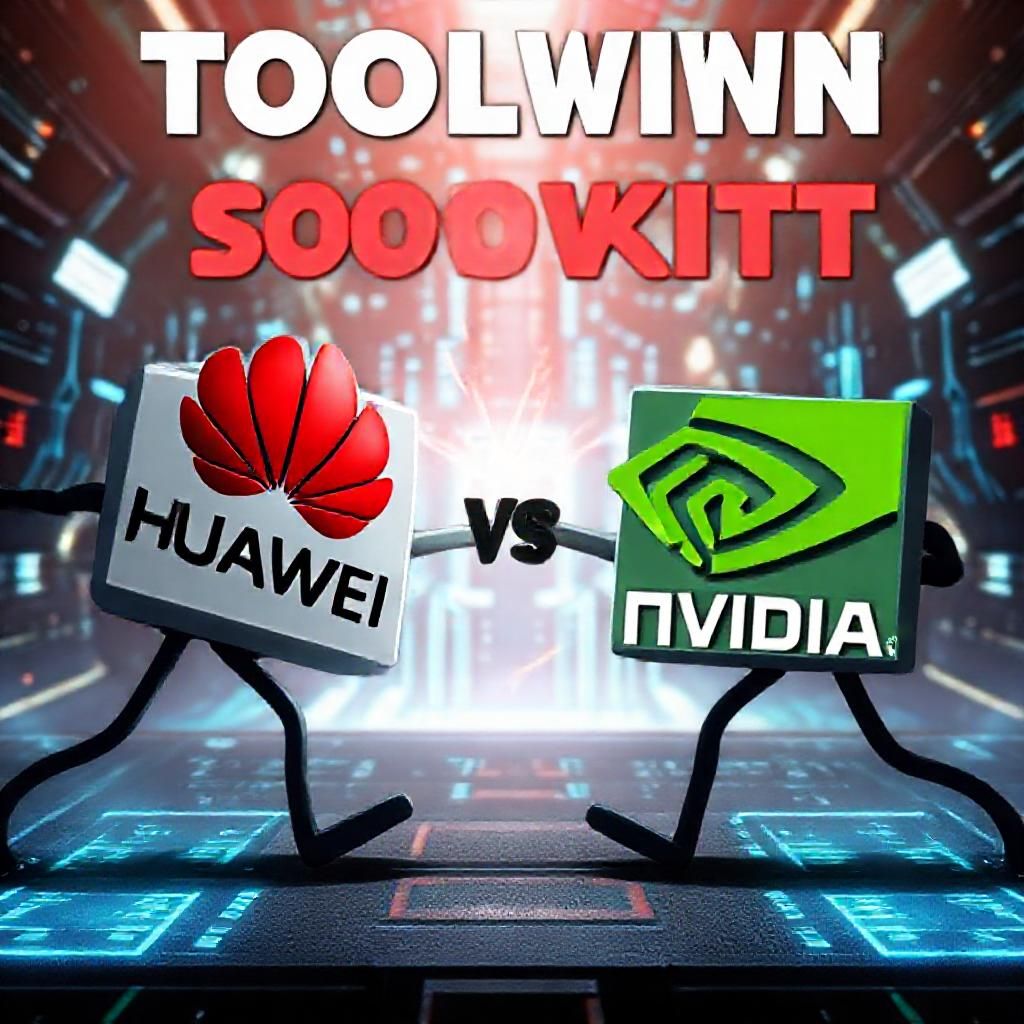
In the bustling world of artificial intelligence (AI) development, few things have been as dominant as NVIDIA’s CUDA. Known for its extensive ecosystem and robust performance, CUDA has long been the go-to toolkit for developers working on neural networks and AI solutions. However, the tech world is buzzing with the recent news that Huawei has decided to open-source its own CANN (Compute Architecture for Neural Networks) software toolkit, potentially shaking up an industry that seemed stable.
For those unfamiliar with these technical terms, think of CUDA as a powerful toolbox developed by NVIDIA. It’s a collection of software and tools that help developers create complex AI applications, especially those requiring heavy computational power. It’s like the Swiss Army knife for AI developers, providing them with everything they need to build, test, and optimize AI models.
Huawei’s CANN, on the other hand, is a similar toolkit that the Chinese tech giant has been developing. By making CANN open-source, Huawei is essentially inviting developers from all around the world to collaborate, improve, and innovate upon their platform without the restrictions that come with proprietary software. This move is significant because open-source software tends to accelerate innovation by allowing a wider range of contributors to enhance and expand upon the original platform.
But why exactly is this such a big deal? For starters, NVIDIA’s CUDA has been somewhat monopolistic in the AI development space. While it offers unparalleled advantages, it also ties developers to NVIDIA’s hardware ecosystem. In contrast, an open-source toolkit like CANN could offer developers more flexibility and potentially reduce costs by allowing them to choose different hardware solutions.
Moreover, the open-sourcing of CANN might lead to increased competition and innovation, driving down costs and improving technology faster than ever before. It also aligns with a broader trend in the tech industry, where open-source solutions are increasingly seen as a way to foster collaboration and democratize access to cutting-edge technology.
Yet, challenges remain. Huawei’s CANN will need to build a community and ecosystem that can rival the well-established CUDA. Developers will need to be convinced that CANN can provide the same level of support, functionality, and performance that they have come to expect from CUDA.
In conclusion, Huawei’s bold move to open-source CANN could mark a significant shift in the AI development landscape. By challenging the status quo, Huawei is not just offering an alternative to CUDA but is also advocating for a more open and collaborative future in AI development. Whether CANN can truly break the CUDA monopoly remains to be seen, but one thing is certain: the race to innovate in AI just got a lot more interesting.
Leave a Reply