Blog

  • AI Without Rules: The Risk of a Trust Crisis

    AI Without Rules: The Risk of a Trust Crisis

    # AI Without Rules: The Risk of a Trust Crisis

    In the whirlwind race to deploy artificial intelligence (AI) across every conceivable domain, the emphasis has often been on speed and innovation. However, Suvianna Grecu, a prominent advocate for ethical technology and the founder of the AI for Change Foundation, raises a crucial point: without immediate and robust governance, we may be hurtling towards a ‘trust crisis’ that could undermine the very fabric of AI advancements.

    ## The Urgent Call for Governance

    Grecu’s concern is straightforward yet profound. While AI holds the promise of revolutionizing industries—from healthcare to finance, and beyond—the absence of comprehensive rules and ethical guidelines could lead to ‘automating harm at scale.’ In other words, if left unchecked, AI systems could replicate or even exacerbate existing biases, make erroneous decisions, or operate in ways that are harmful to society.

    The risk is that, in the absence of trust, the public might become wary of AI technologies, potentially stymying innovation and leading to a backlash against AI implementation. This is not just a hypothetical concern. Recent incidents, such as biases in facial recognition software or AI-driven decision-making in judicial systems, highlight the tangible consequences of inadequate oversight.

    ## Balancing Innovation and Safety

    The challenge lies in finding the right balance between fostering innovation and ensuring safety. AI’s rapid development is outpacing the creation of regulatory frameworks, leading to a ‘Wild West’ scenario where the lines between beneficial and harmful applications are blurred. Grecu suggests that without clear rules, we risk not only the trust of the public but also the future potential of AI itself.

    ## A Global Perspective

    This is not a problem faced by one nation or industry alone. It’s a global issue that requires a coordinated international response. Organizations and governments worldwide must collaborate to establish standardized rules and best practices that transcend borders. The European Union, for example, has taken steps towards this with its AI Act, focusing on risk-based regulations. However, more needs to be done to ensure these policies are comprehensive and globally applicable.

    ## The Path Forward

    To mitigate the risks and harness the full potential of AI, Grecu advocates for the establishment of transparent, accountable, and enforceable guidelines. This includes developing ethical AI frameworks that prioritize human rights, privacy, and fairness. By doing so, we can prevent a trust crisis and ensure that AI develops into a force for good, rather than a source of harm.

    In conclusion, while AI’s potential is vast, the responsibility to guide its development ethically and safely is equally immense. As Suvianna Grecu emphasizes, the time to act is now—before the trust crisis becomes our reality.

    ## Related Insights

    For those interested in further exploring this topic, recent discussions have also highlighted the role of AI ethics boards and the importance of diversity in AI development teams to mitigate biases. These efforts, combined with strong governance, can help in steering AI towards a more equitable future.


  • NVIDIA’s Blackwell GPU: Powering the Future of AI and Enterprise Servers

    NVIDIA’s Blackwell GPU: Powering the Future of AI and Enterprise Servers

    # NVIDIA’s Blackwell GPU: Powering the Future of AI and Enterprise Servers

    In the ever-evolving landscape of technology, NVIDIA continues to be a pioneering force, pushing the boundaries of what’s possible in computing. The latest announcement from NVIDIA regarding their RTX PRO 6000 Blackwell Server Edition GPU is not just another release—it’s a significant leap forward for enterprise-level processing power and efficiency.

    ## What is the Blackwell GPU?

    The NVIDIA RTX PRO 6000 Blackwell Server Edition GPU is the newest addition to NVIDIA’s cutting-edge lineup, specifically designed to boost the performance of enterprise servers. These GPUs are not just about raw power; they are engineered to deliver superior efficiency and performance across a wide range of applications. From artificial intelligence and graphics to simulation, analytics, and industrial tasks, the Blackwell GPU promises to handle it all with impressive prowess.

    ## Integration into Major Servers

    NVIDIA’s Blackwell GPUs are set to be integrated into servers from some of the biggest names in technology, including Cisco, Dell Technologies, HPE, Lenovo, and Supermicro. These companies will offer the GPUs in various configurations within 2U server systems, which are known for their balance between processing power and space efficiency.

    ## Enhanced Capabilities for AI and Beyond

    The introduction of the Blackwell GPU is particularly exciting for fields that rely heavily on data-intensive tasks. AI models, which require immense computational power, will benefit from the enhanced capabilities of these GPUs. Furthermore, industries focusing on robotics, simulation, and complex analytics will find the efficiency improvements particularly beneficial. This GPU isn’t just about faster processing; it’s about smarter, more sustainable computing.

    ## A Step Towards the Future

    With this release, NVIDIA isn’t just catering to the current demands of the tech industry; they are anticipating the future. The Blackwell GPU represents a step towards more integrated, powerful, and efficient computing systems that can handle the growing demands of AI and industrial applications.

    In conclusion, NVIDIA’s latest announcement is not just a technical upgrade—it’s a strategic move that positions the company and its partners at the forefront of innovation. As industries continue to evolve and new challenges arise, the Blackwell GPU is poised to be a key player in addressing these needs.

    ## Looking Ahead

    As we look to the future, NVIDIA’s advancements in GPU technology will undoubtedly continue to shape the landscape of enterprise computing. With the Blackwell GPU, businesses have a powerful new tool at their disposal, one that not only meets today’s needs but is also ready for tomorrow’s challenges.

    For tech enthusiasts and industry professionals alike, this development marks an exciting chapter in the story of technology’s evolution.

  • SoundHound AI: Now With the Vision to See the World

    SoundHound AI: Now With the Vision to See the World

    ### SoundHound AI: Now With the Vision to See the World

    Imagine cruising down a scenic highway, spotting an intriguing landmark, and simply asking your car, “What’s that building over there?” without needing to reach for your phone or consult a guidebook. SoundHound AI is making this futuristic scenario a reality by giving its voice assistant the power of sight.

    SoundHound, a leader in voice-enabled AI technology, is well-known for its highly responsive and accurate voice assistants. The company is now launching Vision AI, an exciting new feature that equips its AI with visual recognition capabilities. This means that SoundHound’s AI can now “see” and interpret the world around it, much like we do.

    #### The Evolution of AI: From Hearing to Seeing

    Voice assistants have come a long way since their inception, evolving from basic voice command processors to sophisticated AI systems capable of engaging in complex conversations. SoundHound’s latest innovation takes this evolution a step further by integrating visual recognition.

    Vision AI works by using camera inputs to analyze and identify objects, buildings, and landmarks. Imagine driving through a new city and being able to ask your AI assistant about the surrounding architecture without needing to take your eyes off the road. It’s an enhancement that not only adds convenience but also enriches the user’s experience by providing instant, contextual information.

    #### How Does Vision AI Work?

    Vision AI combines machine learning algorithms with computer vision technology to deliver real-time information about visual inputs. When you pose a question like “What’s that building over there?”, the AI utilizes the camera input to capture an image, processes it using its advanced recognition algorithms, and then retrieves relevant information from its vast database to provide an answer.

    This technology is built on the foundation of SoundHound’s proprietary technology platform, Houndify, which already supports voice recognition across various devices and applications. By incorporating Vision AI, SoundHound is positioning itself as a pioneer in the field of multimodal AI interaction.

    #### The Broader Impact

    The addition of visual capabilities to AI not only enhances user interaction but also opens up new possibilities for accessibility, education, and entertainment. Imagine educational tours where students can interact with their environment through questions and answers, or visually impaired individuals receiving detailed descriptions of their surroundings.

    As AI continues to evolve, the integration of multiple senses will undoubtedly lead to more personalized and intuitive technology. SoundHound AI’s Vision AI is a promising step towards a future where AI assistants become seamless extensions of our senses.

    In conclusion, SoundHound AI’s venture into vision-enhanced AI marks a significant milestone in AI development. It exemplifies how technology can bridge the gap between digital and physical worlds, making our interactions with AI more natural and effective.

    Stay tuned as we watch how Vision AI transforms the realm of voice assistants, heralding a new era of AI capabilities.

  • Exploring the Brave New World: AI in the Hands of US Judges

    Exploring the Brave New World: AI in the Hands of US Judges

    # Exploring the Brave New World: AI in the Hands of US Judges

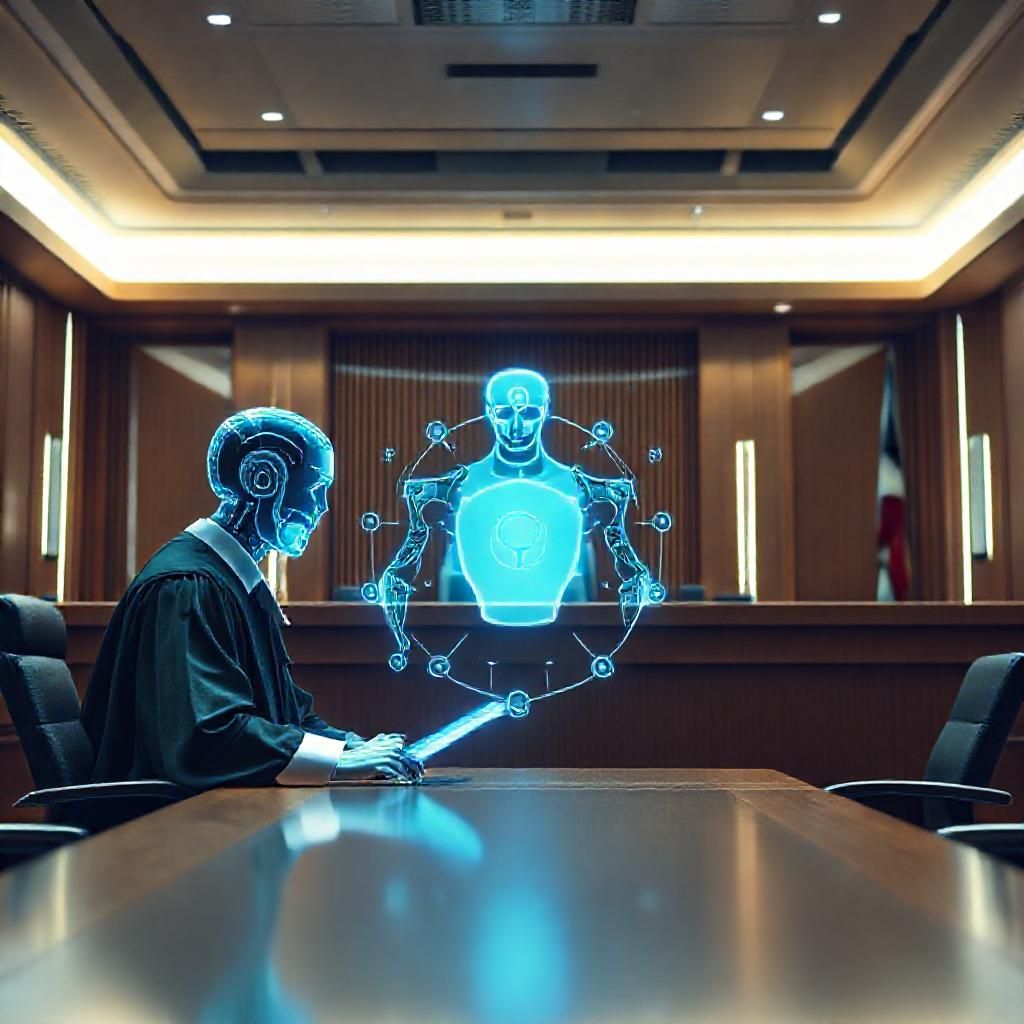
    Imagine a world where courtrooms are not just filled with the sound of attorneys debating and judges ruling, but also the quiet hum of artificial intelligence (AI) engines working tirelessly behind the scenes. This isn’t a scene from a futuristic movie; it’s happening right now in the United States legal system. As AI technology continues to evolve, it’s finding its way into the hands of early-adopter judges, promising to revolutionize the judicial process—though not without its challenges.

    AI has the potential to transform legal proceedings, offering capabilities such as analyzing vast amounts of legal documents, identifying relevant precedents, and even predicting case outcomes with significant accuracy. For judges, this can mean increased efficiency and a reduction in the time-consuming tasks that have traditionally bogged down the judicial process. However, with great power comes great responsibility, and recent events have highlighted the need for a careful approach.

    In recent months, the legal community has witnessed some notable mishaps involving AI. Prestigious law firms have been caught submitting documents that referenced non-existent cases—a blunder attributed to over-reliance on AI tools without sufficient human oversight. These errors underscore a critical issue: while AI can handle vast amounts of data, it lacks the nuanced understanding of human context, making human supervision indispensable.

    In the courtroom, the introduction of AI is not merely about replacing human tasks but enhancing them. The tool is as powerful as its operator is skilled, meaning judges and lawyers must be adequately trained to understand the capabilities and limitations of AI technologies. Fostering an environment where AI acts as an assistant rather than a decision-maker is crucial to avoid potential pitfalls.

    This journey into AI in the legal field is just beginning. As courts continue to explore and implement these technologies, the balance between efficiency and accuracy will be continually tested. It is a cautionary tale and a hopeful prospect; AI has the potential to make justice more accessible and swift, but the human element remains as essential as ever.

    The future of AI in the legal system hinges on its integration into daily practices, and the lessons learned from early adopters will likely shape policies and ethical standards for decades to come. As we stand on the precipice of this technological evolution, one thing is clear: AI’s role in the courtroom is set to grow, but not without us keeping a watchful eye.

    **Further Reading:** For those interested in the ethical implications and case studies of AI in the legal field, the American Bar Association offers resources and discussions on the intersection of law and technology.

    Stay informed, stay critical, and embrace the change—but always with a healthy dose of skepticism and human oversight.

  • GPT-5: The Next Step, Not a Giant Leap for OpenAI

    GPT-5: The Next Step, Not a Giant Leap for OpenAI

    # GPT-5: The Next Step, Not a Giant Leap for OpenAI

    In the ever-evolving world of artificial intelligence, anticipation often swirls like an electric current with every new release. This time, the buzz is about OpenAI’s latest offering: GPT-5. Headed by visionary Sam Altman, this release has been eagerly awaited by tech enthusiasts and professionals alike. But what does GPT-5 actually bring to the table?

    ## Beyond the Hype

    Grace Huckins recently shed light on what GPT-5 truly represents. While it certainly offers a polished and more sophisticated experience than its predecessors, it doesn’t quite qualify as a revolutionary leap in AI development. Instead, GPT-5 is best described as a refinement—a natural, albeit significant, progression in the capabilities of AI models.

    ## Evolution Over Revolution

    The hallmark of GPT-5 is its enhanced ability to understand and generate human-like text more efficiently. This refinement is a testament to OpenAI’s commitment to iterative improvement, building upon the solid foundation laid by its previous models. Users will likely notice improvements in the model’s contextual awareness and coherence, making interactions feel smoother and more intuitive.

    ## The Technical Undercurrents

    For those diving into the technical depths, GPT-5 showcases advancements in architectural optimization and training processes. These improvements allow for better resource management, meaning the model can perform more complex tasks without an exponential increase in computational power. This is particularly significant as it aligns with the industry’s push towards sustainable, energy-efficient AI development.

    ## The Bigger Picture

    While GPT-5 may not be the groundbreaking release some anticipated, its enhancements are crucial for the broad adoption and integration of AI technologies in various sectors. From customer service to creative writing, the applications of a more refined GPT model are boundless.

    In conclusion, GPT-5 represents a critical step forward in AI’s evolution. It reminds us that while monumental leaps grab headlines, it’s the steady march of progress that truly shapes the future.

    ## What Lies Ahead?

    As OpenAI continues its journey, one can only imagine what future iterations will bring. The focus on refinement over revolution hints at a more sustainable roadmap for AI development, prioritizing quality and reliability over flashiness.

    Stay tuned to witness how these incremental improvements will pave the way for more sophisticated, humane, and responsible AI applications.

  • The Dawn of GPT-5: A Leap Toward AI Supremacy

    The Dawn of GPT-5: A Leap Toward AI Supremacy

    ### The Dawn of GPT-5: A Leap Toward AI Supremacy

    In the ever-evolving landscape of artificial intelligence, OpenAI has just launched a game-changer: GPT-5. This latest iteration of the Generative Pre-trained Transformer model has been making headlines and for good reason. Imagine a tool so advanced that it leaves even its creators in awe—Sam Altman, CEO of OpenAI, compared his feelings about GPT-5 to those of the developers of the atom bomb, due to its profound capabilities and implications.

    #### The Power of GPT-5

    So, what makes GPT-5 so special? At its core, GPT-5 builds on the foundation laid by its predecessors, but it ramps up the intelligence quotient by several notches. It can process and generate human-like text with such nuance and understanding that it often feels like conversing with another person. But it’s not just about conversation—GPT-5 has enhanced capabilities in understanding context, inferring intentions, and even predicting possible outcomes based on given data.

    Sam Altman has noted that working on GPT-5 carries a significant weight, likening it to the monumental responsibility felt by the developers of the atom bomb. This isn’t just hyperbole. The analogy underscores the transformational power and potential impact of GPT-5, which could redefine everything from everyday interactions to complex problem-solving across various industries.

    #### A New Era of AI

    While tech giants are racing to develop models that can perform similar tasks, OpenAI’s GPT-5 stands out due to its advanced capabilities and the strategic foresight of its creators. It’s not just about mimicking human conversation anymore; it’s about enhancing human capabilities and making tasks easier, faster, and more efficient. Imagine a world where AI can assist in medical diagnoses, create innovative solutions for climate change, or even write complex software code with minimal human intervention.

    #### The Road Ahead

    However, with great power comes great responsibility. As AI models like GPT-5 become more integrated into daily life, ethical considerations become paramount. Concerns about data privacy, decision-making transparency, and the potential for misuse are at the forefront of discussions among tech leaders and policymakers.

    OpenAI’s release of GPT-5 is more than just an advancement in technology; it’s a call to action for the global community to thoughtfully integrate these innovations into society. As we stand on the cusp of a new era in AI, the need for responsible stewardship and governance has never been more critical.

    In conclusion, GPT-5 is not just another iteration in a series of AI models; it’s a revolutionary leap forward. As we continue to explore its capabilities and potential, we must also navigate the challenges it presents with care and foresight.

  • AI in Medicine: Navigating the Ethical Minefield

    AI in Medicine: Navigating the Ethical Minefield

    Artificial Intelligence (AI) is rapidly transforming the healthcare landscape, promising to revolutionize diagnostics, treatment planning, and patient care. However, a recent study has unveiled a concerning vulnerability in AI’s ability to make ethical medical decisions, spotlighting the necessity for human intervention in critical scenarios.

    Imagine a scenario where AI is tasked with making life-or-death decisions based on ethical dilemmas. It sounds like a futuristic concept, but it’s a reality that researchers are exploring to understand AI’s capabilities and limitations. In this recent study, researchers introduced slight modifications to well-known ethical dilemmas and observed how AI systems, including models as sophisticated as ChatGPT, responded.

    The findings? AI often gravitated toward intuitive yet incorrect solutions, ignoring updated facts that could alter the outcome. This tendency to default to gut reactions, rather than logically processing all available information, exposes a significant flaw when AI navigates the complex world of medical ethics. The implications are profound, raising questions about the reliability of AI in high-stakes health decisions.

    In healthcare, decisions often involve more than just data and logic; they require a nuanced understanding of ethics and empathy, areas where AI still struggles. While AI can process vast amounts of information faster than any human, the study suggests that it lacks the emotional intelligence and ethical reasoning that are essential in medicine.

    This research highlights an essential truth: AI, no matter how advanced, cannot replace human judgment in situations where ethical nuance is critical. Human oversight remains indispensable in AI-driven healthcare, especially when decisions have far-reaching consequences on human lives.

    As AI continues to evolve, these findings call for a more cautious and balanced approach to integrating AI into healthcare systems. Developers and healthcare professionals must work together to ensure that AI systems are designed with safeguards that prioritize ethical considerations and reinforce human oversight, ultimately protecting patient well-being.

    The journey toward fully autonomous AI in medicine is fraught with challenges, but with careful navigation, it holds the promise of a more efficient and effective healthcare system. Until then, the human touch remains irreplaceable in the art of healing.

  • Unmasking Reality: Google’s New AI Tool Fights Deepfakes Beyond Faces

    Unmasking Reality: Google’s New AI Tool Fights Deepfakes Beyond Faces

    ### Unmasking Reality: Google’s New AI Tool Fights Deepfakes Beyond Faces

    In a world where seeing is believing, the rise of deepfake technology is muddying the waters of truth. These AI-generated videos are becoming not just more common, but alarmingly convincing. However, a new beacon of hope is emerging from the tech realm. Google, in collaboration with researchers at UC Riverside, has unveiled a groundbreaking tool named UNITE. This advanced system promises to tackle the intricacies of deepfakes, even when the typical cues, like faces, are out of sight.

    #### The Deepfake Dilemma

    Deepfakes are a form of synthetic media where artificial intelligence creates highly realistic fake videos. Traditionally, deepfake detection has relied heavily on scrutinizing facial features—an approach that now seems limiting as these videos evolve. Deepfake creators have started to shift focus, manipulating entire scenes or using other tricks to evade detection, leaving traditional methods ineffective.

    #### Enter UNITE: A New Era of Detection

    UNITE, or Universal Network for Identifying Tampered Environments, marks a significant leap in AI technology. Unlike its predecessors, UNITE looks beyond faces. It analyzes backgrounds, motion patterns, and tiny, almost imperceptible cues within the video environment to detect anomalies. This holistic approach enhances its ability to identify doctored videos, providing a robust tool in the fight against misinformation.

    #### Why UNITE Matters

    As the technology to produce deepfakes becomes more accessible, the risk of misinformation escalates. Fake content can have profound implications, from spreading false news to damaging reputations. For newsrooms and social media platforms, maintaining the integrity of content is crucial. UNITE could become an essential asset in their arsenal, safeguarding the truth and ensuring viewers can trust what they see.

    #### Staying Ahead of the Curve

    While UNITE is a significant advancement, the battle against deepfakes is ongoing. The tech community continues to innovate, developing new ways to safeguard digital content. For instance, other initiatives are focusing on watermarking or blockchain technology to verify media authenticity.

    In conclusion, the collaboration between Google and UC Riverside through UNITE represents a pivotal step forward in deepfake detection. As this technology rolls out, it promises not only to enhance our ability to discern truth from fiction but also to restore confidence in digital media.

    Stay tuned for more updates as we continue to explore the fascinating and ever-evolving world of AI and its implications on our reality.

  • Harvard’s New Ultra-Thin Chip: A Quantum Leap in Computing

    Harvard’s New Ultra-Thin Chip: A Quantum Leap in Computing

    ### Harvard’s New Ultra-Thin Chip: A Quantum Leap in Computing

    In the world of technology, bigger isn’t always better. Sometimes, the most revolutionary advancements come in the smallest packages. Harvard’s latest innovation is a testament to this truth, as researchers unveil an ultra-thin chip with the potential to change the landscape of quantum computing.

    #### The Breakthrough

    At the heart of this innovation is a newly developed metasurface—a meticulously engineered, nanostructured layer that replaces the bulky optical components traditionally used in quantum computing. This metasurface is thinner than a human hair, yet it possesses the ability to perform complex quantum operations, such as generating entangled photons, which are essential for quantum information processing.

    #### How It Works

    The Harvard team leveraged the principles of graph theory to simplify the design of these quantum metasurfaces. Graph theory, a branch of mathematics focusing on the properties of interconnected nodes, allowed researchers to efficiently organize the nanostructures within the metasurface. This enabled the creation of a chip that not only reduces the size and complexity of quantum devices but also enhances their stability and scalability.

    #### Why It Matters

    Quantum computing is often heralded as the future of computing, promising to solve problems beyond the reach of classical computers. However, current quantum systems are often bulky, complex, and require extremely low temperatures to operate. Harvard’s metasurface chip addresses these challenges by paving the way for room-temperature quantum technology, which is more accessible and practical for real-world applications.

    #### The Future of Quantum Networks

    With this advancement, the potential for more compact and efficient quantum networks becomes a reality. Such networks could revolutionize fields ranging from cryptography to material science, offering unprecedented computational power and security.

    Harvard’s ultra-thin metasurface chip represents a significant step forward in quantum technology. As researchers continue to refine and expand upon this concept, the prospects for quantum computing appear brighter than ever, promising a future where these once-theoretical systems become integral to everyday technology.

    Stay tuned as we follow this exciting development and explore its implications for the tech world and beyond.

  • Navigating the AI Frontier: Why Rules Matter to Prevent a Trust Crisis

    Navigating the AI Frontier: Why Rules Matter to Prevent a Trust Crisis

    ### Navigating the AI Frontier: Why Rules Matter to Prevent a Trust Crisis

    In the rapidly evolving world of technology, Artificial Intelligence (AI) stands as a double-edged sword. It promises unprecedented advances, from automating mundane tasks to revolutionizing industries, yet it also carries the potential for significant harm if left unchecked. Suvianna Grecu, a prominent voice in technology ethics and the Founder of the AI for Change Foundation, has sounded the alarm: without proper rules and governance, AI may lead us into a ‘trust crisis’.

    #### The Urgency of Governance

    As countries and companies rush to integrate AI into daily life, Grecu argues that the emphasis has been heavily tilted towards speed rather than safety. This approach, she warns, could automate harm on a massive scale. Without immediate and robust governance frameworks, AI could be misused, leading to biased decision-making, privacy infringements, and other ethical dilemmas that erode public trust.

    #### Why Trust Matters

    Trust is a critical component in the adoption of new technologies. When people believe that AI systems are fair, transparent, and accountable, they are more likely to embrace these innovations. However, if AI systems are perceived as opaque and unregulated, the resulting skepticism could stall technological progress and lead to public backlash.

    #### Building a Framework for AI Governance

    Grecu is not alone in calling for regulations. Many industry experts and policymakers have echoed her sentiments, underscoring the need for international cooperation to establish standards and best practices for AI. Recent strides in AI legislation, such as the EU’s AI Act, aim to create a balanced approach that fosters innovation while protecting public interests.

    #### The Path Forward

    As AI continues to develop at a breakneck pace, the call for governance grows louder. Establishing clear guidelines not only prevents potential abuses but also builds a foundation for sustainable innovation. By prioritizing safety alongside speed, we can ensure that AI remains a tool for positive change rather than a source of widespread harm.

    In conclusion, while the race to deploy AI is undeniable, so is the need for rules that secure its responsible use. As Suvianna Grecu and others emphasize, without these safeguards, we risk not only a technological misstep but a profound trust crisis that could shape the future of AI and its role in our society.