Blog

  • Agents4Science: The Dawn of AI-Powered Scientific Conferences

    Agents4Science: The Dawn of AI-Powered Scientific Conferences

    # Agents4Science: The Dawn of AI-Powered Scientific Conferences

    Imagine attending a scientific conference where the presenters are not human, but highly intelligent AI systems. This might sound like science fiction, but it’s becoming a reality with the launch of Agents4Science. Scheduled for October, this groundbreaking event aims to redefine the traditional academic conference landscape by placing artificial intelligence at the forefront.

    ## An AI-Driven Academic Gathering

    Agents4Science is a pioneering online conference where the stars of the show are AI agents. These digital entities will take charge of researching, writing, and reviewing a wide array of scientific topics, from the intricacies of physics to the complexities of medical science. The event will culminate in presentations delivered entirely through text-to-speech technology, offering a unique and futuristic experience for attendees.

    ## Why AI?

    The use of AI in this context is not just a gimmick. AI has shown remarkable abilities in processing large datasets, identifying patterns, and providing insights that might elude human researchers. By leveraging these capabilities, Agents4Science aims to demonstrate how AI can contribute to scientific progress, not just as a tool, but as an active collaborator in research and development.

    ## The Implications for Science

    Hosting a conference where AI plays such a central role raises intriguing questions and possibilities. Can AI match the nuanced understanding and creativity of human scientists? How will AI change the way we approach research and collaboration? This event may provide some answers and pave the way for future integration of AI in academia.

    Moreover, the success of Agents4Science could inspire similar AI-driven initiatives across various disciplines, pushing the boundaries of what AI can achieve in scientific inquiry.

    ## A Glimpse into the Future

    With the rapid advancements in AI technology, the potential for AI to complement and enhance human efforts in science is immense. Agents4Science serves as both a testament to current AI capabilities and a glimpse into a future where AI and humans work hand-in-hand to solve complex scientific challenges.

    As AI continues to evolve, so too will its role in our understanding of the world. This conference marks an exciting step in that journey, and it will be fascinating to see how this AI-centric approach to conferences develops in the coming years.

    Stay tuned as we follow this exciting event and explore the outcomes of this novel AI-driven scientific gathering.
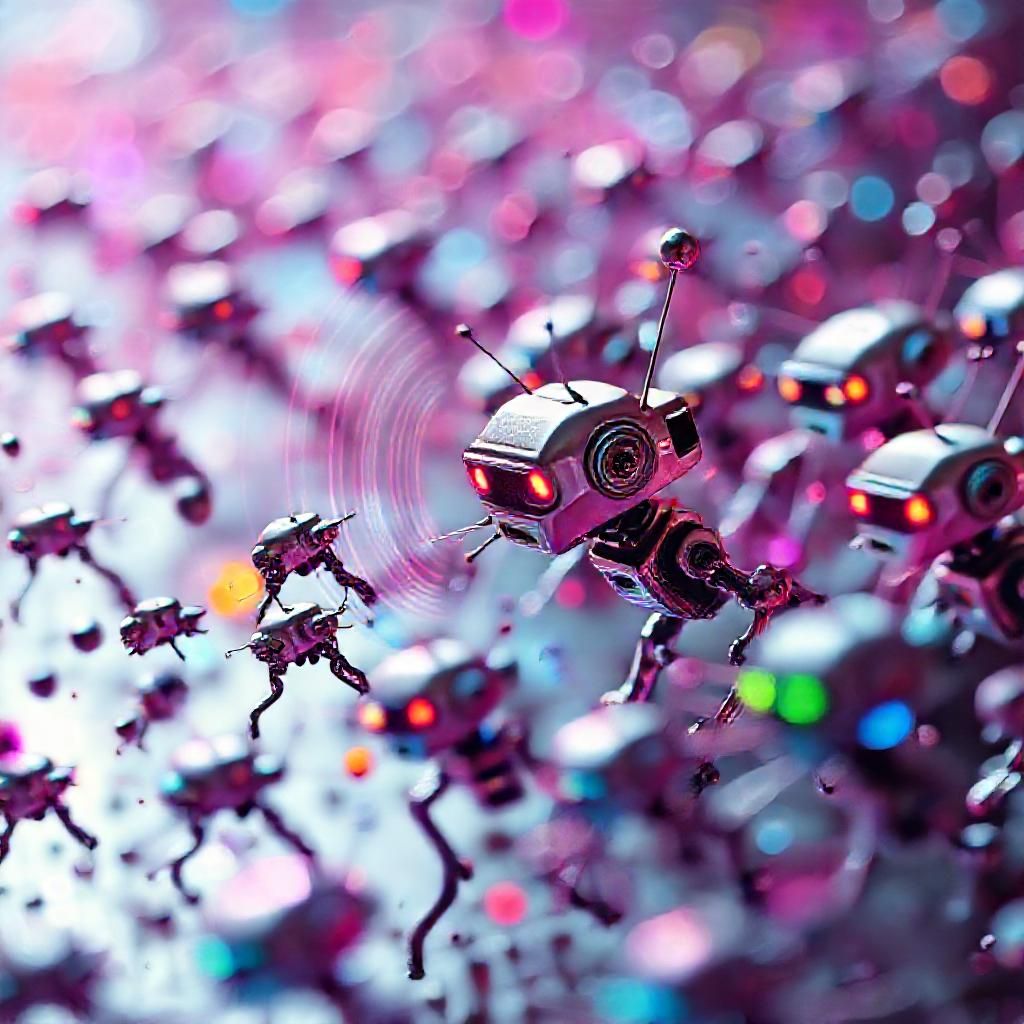
  • The Future of Micro-Machines: How Sound Waves Power Self-Healing Robot Swarms

    The Future of Micro-Machines: How Sound Waves Power Self-Healing Robot Swarms

    ### The Future of Micro-Machines: How Sound Waves Power Self-Healing Robot Swarms

    Imagine a world where tiny robots move in perfect harmony, communicating seamlessly like a flock of birds or a hive of bees. This is not the realm of science fiction anymore; it’s the cutting-edge reality that scientists are bringing to life. These microscopic robots, enabled by the power of sound waves, are set to revolutionize how we approach problems ranging from pollution to medical treatments.

    #### A Symphony of Sound

    The secret to these robots’ success lies in their communication method. Unlike conventional machines that rely on electronic signals, these tiny bots utilize sound waves—a natural and efficient medium for interaction. This innovative approach not only allows them to communicate over short distances but also to coordinate their actions in complex environments, forming swarms that can adapt and reshape themselves as needed.

    #### Self-Organizing and Self-Healing

    One of the most remarkable features of these robotic swarms is their ability to self-organize and self-heal. If a portion of the swarm is damaged, the robots can reorganize, filling in gaps to maintain functionality. This resilience opens up a plethora of possibilities, particularly in environments where human intervention is challenging or risky.

    #### Transformative Applications

    The potential applications for these shape-shifting swarms are vast and varied. In the medical field, they could revolutionize how we deliver drugs, providing targeted treatments with unprecedented precision. For environmental scientists, these robots could clean up polluted areas, navigating through tricky terrains that are otherwise inaccessible.

    Moreover, these micro-machines could be the key to exploring hazardous environments—whether it’s diving into the depths of the ocean or navigating the aftermath of a natural disaster. Their ability to adapt in real-time makes them invaluable for tasks that demand flexibility and resilience.

    #### The Road Ahead

    While the technology is still in its nascent stages, the implications of these sound-powered swarms are undeniably exciting. As research progresses, we can expect to see even more sophisticated applications, possibly integrating with other technologies like artificial intelligence and machine learning to further enhance their capabilities.

    In conclusion, the development of these microscopic robots marks a significant milestone in the fields of robotics and technology. By harnessing the power of sound waves, we are not just creating machines, but a new form of life that can work alongside us to solve some of the world’s most pressing challenges.

    Stay tuned as we continue to explore this fascinating frontier, where the line between science fiction and reality blurs, opening up a world of possibilities that once seemed impossible.

  • Magnetic Magic: How a Simple Trick is Making Quantum Computing More Stable

    Magnetic Magic: How a Simple Trick is Making Quantum Computing More Stable

    ### Magnetic Magic: How a Simple Trick is Making Quantum Computing More Stable

    In the world of technology, quantum computing is often seen as the holy grail of computational power. It promises to solve problems that are currently unsolvable by classical computers. However, the journey to practical quantum computing has been fraught with challenges, primarily due to the fragile nature of qubits – the building blocks of quantum computers. These qubits are notoriously sensitive to environmental disturbances, which has made achieving stability a significant obstacle.

    But what if a common element of nature, magnetism, could offer a solution? Researchers have recently unveiled a new approach that could revolutionize quantum computing by using magnetic interactions to stabilize qubits. Unlike traditional methods that rely on rare spin-orbit interactions, this innovative method taps into the abundant magnetic interactions present in many materials, creating robust topological excitations that shield qubits from external noise.

    ### The Science Behind It

    At the heart of this breakthrough is the discovery of a new quantum material that leverages these magnetic interactions. By aligning magnetic moments in a specific configuration, researchers can create a protective environment for qubits. This is a stark contrast to previous methods that required complex and rare material properties to achieve similar effects.

    Furthermore, the team has developed a computational tool to identify and design materials that exhibit these desirable magnetic properties. This tool accelerates the discovery process, allowing scientists to quickly pinpoint materials that can be used in practical quantum computing applications.

    ### Why This Matters

    The implications of this development are profound. By making quantum computers more stable and less susceptible to environmental disturbances, we are taking a significant step toward realizing the full potential of quantum technology. This could lead to advancements in fields like cryptography, complex simulations, and artificial intelligence, where quantum computing could provide unparalleled efficiency and power.

    Moreover, using magnetic interactions makes this approach more feasible, as these interactions are common in many materials. This means that the path to scalable and economically viable quantum computers may be shorter than previously anticipated.

    ### Looking Ahead

    As researchers continue to explore and refine these magnetic materials, the future of quantum computing looks promising. The combination of this magnetic trick with the new computational tool could provide a blueprint for developing the next generation of quantum computers. These machines could be more robust, reliable, and ready to tackle the computational challenges of tomorrow.

    In conclusion, this magnetic innovation isn’t just a technical achievement; it’s a beacon of hope for the future of quantum computing. By making quantum technology more stable and accessible, we’re not just opening doors to new possibilities – we’re setting the stage for a technological revolution.

    Stay tuned as we continue to follow this exciting development in the realm of quantum computing.

  • Cracking the Quantum Code: A Leap Forward in Computing

    Cracking the Quantum Code: A Leap Forward in Computing

    ### Cracking the Quantum Code: A Leap Forward in Computing

    Imagine a world where computers can solve complex problems in seconds, a feat that would take today’s supercomputers thousands of years. This world is becoming more tangible thanks to recent advancements in quantum computing. A research team has reached a significant milestone by cracking a quantum code within a single atom, promising to reshape the landscape of computing as we know it.

    #### The Quantum Leap

    The key to this accomplishment lies in the creation of a new quantum logic gate. Traditionally, quantum computers rely on qubits, the quantum equivalent of classical bits, to perform calculations. However, this team has managed to use fewer qubits by encoding them with the GKP error-correction code, a powerful method named after its creators, Gottesman, Kitaev, and Preskill.

    Error correction is crucial in quantum computing because qubits are notoriously fragile and prone to errors caused by environmental factors. The GKP code allows qubits to be more robust, thus reducing the number required for computations and improving the efficiency and scalability of quantum computers.

    #### Entangling Quantum Vibrations

    The breakthrough was achieved by entangling quantum vibrations within a single atom. Entanglement is a quantum phenomenon where particles become interconnected, such that the state of one particle instantly influences the state of another, regardless of the distance separating them. By harnessing this property within a single atom, researchers have laid the groundwork for a new kind of quantum logic gate.

    #### Why This Matters

    This discovery has far-reaching implications. By reducing the number of qubits needed, the development simplifies the architecture of quantum computers, making them more scalable and potentially more cost-effective. This leap forward could accelerate the timeline for practical quantum computing applications, bringing them closer to reality.

    Quantum computing promises to revolutionize fields like cryptography, materials science, and drug discovery by solving problems that are currently unsolvable. With this new advancement, the door to such groundbreaking applications is opening wider.

    #### Looking Ahead

    While this is a significant step, the journey towards fully operational quantum computers is ongoing. Researchers are continually working on improving error correction techniques and qubit stability. The progress made with the GKP code is a testament to the potential of quantum technologies and the innovations that lie on the horizon.

    Stay tuned as we continue to follow the exciting developments in this cutting-edge field. The future of computing is quantum, and it’s unfolding faster than ever.

    By embracing these quantum advancements, we are inching closer to a future where the impossible becomes possible, and the boundaries of technology are pushed beyond today’s understanding.

  • Proton Lumo: The New Era of Privacy-Centric AI Assistance

    Proton Lumo: The New Era of Privacy-Centric AI Assistance

    ### Proton Lumo: The New Era of Privacy-Centric AI Assistance

    In a world where our digital footprints are constantly scrutinized, Proton has emerged as a beacon of privacy, particularly with its AI assistant, Lumo. Known for its commitment to keeping user data secure, Proton has now rolled out a significant upgrade to Lumo, promising not just smarter but also faster responses.

    AI assistants have become indispensable tools in our daily lives, serving as everything from virtual secretaries to digital encyclopedias. However, the convenience they offer often comes at the cost of our privacy. With each query and each task, there’s an underlying concern—where does this data go?

    Proton understands this anxiety, and that’s why Lumo is designed with privacy at its core. Unlike many other AI assistants that store and analyze your data on external servers, Lumo’s operations are structured to prioritize user confidentiality. The latest upgrade enhances its capability to process and respond to queries more efficiently, without needing to compromise on privacy.

    #### What’s New with Lumo?

    The upgrade brings several improvements:

    1. **Speed:** The response time has been significantly reduced, making interactions with Lumo more seamless and fluid.
    2. **Intelligence:** Lumo’s understanding and contextual response abilities have been enhanced, allowing it to provide more relevant and accurate information.
    3. **Privacy Features:** Proton has doubled down on its privacy measures. Lumo processes data locally, ensuring that user information isn’t sent to external servers, which is a common practice among other AI assistants.

    #### Why Privacy Matters

    In recent years, data privacy has become a hot-button issue. With tech giants facing scrutiny over data collection practices, users are increasingly wary of how their information is handled. Proton’s Lumo is a refreshing alternative for those who want the convenience of AI without sacrificing their privacy.

    As we continue to integrate AI into our lives, finding solutions that respect our personal data is crucial. Proton’s latest upgrade to Lumo demonstrates that it is possible to enjoy the benefits of AI while safeguarding privacy.

    #### The Future of AI and Privacy

    Proton’s commitment to privacy is setting a new standard for AI development. As more users become conscious of their digital privacy, other companies might follow suit, leading to a future where privacy and technology go hand in hand.

    In conclusion, Proton’s enhanced Lumo AI assistant is a promising step towards a privacy-conscious digital future. By prioritizing user data protection without compromising functionality, Proton is not just following a trend but leading a movement. As AI continues to evolve, it’s comforting to know that privacy doesn’t have to be the price of progress.

  • Huawei Cloud: The Rising Star in Container Management

    Huawei Cloud: The Rising Star in Container Management

    In the ever-evolving world of technology, cloud computing stands as a monumental pillar, supporting everything from small startups to massive enterprises. Among its many components, container management has become a crucial element, enabling developers to deploy applications more efficiently across diverse environments. For years, the conversation around container management has been dominated by big names like Google, AWS, and Microsoft.

    However, a recent development has shaken up this landscape. Huawei Cloud has been recognized in Gartner’s Magic Quadrant for Container Management, marking its growing influence in what many considered a well-established arena. So, what has Huawei done differently to achieve this recognition? It all boils down to their broad, open approach.

    **Breaking Down the Magic Quadrant**

    Gartner’s Magic Quadrant is a respected industry report that evaluates technology vendors based on their ability to execute and the completeness of their vision. Being placed on this quadrant is no small feat; it signals that a company is not only capable of providing a robust solution but is also forward-thinking in its approach.

    **Huawei’s Open Strategy**

    Huawei Cloud’s strategy focuses on openness and collaboration. By embracing open-source technologies and fostering partnerships, Huawei has built a cloud ecosystem that is both flexible and scalable. This approach allows developers to integrate Huawei Cloud’s services seamlessly into their workflows, enhancing productivity and innovation.

    This open strategy contrasts with the more proprietary approaches of some larger competitors. Huawei’s commitment to open standards and interoperability means that its solutions can easily adapt to various business needs, making it a versatile choice for companies looking to optimize their container management processes.

    **The Growing Importance of Containers**

    The rise of microservices and containerization has transformed how applications are developed and deployed. Containers provide a lightweight, portable way to bundle application code with its dependencies, ensuring consistency across different environments. This capability is especially valuable in today’s fast-paced development cycles, where agility and speed are paramount.

    Huawei’s recognition by Gartner underscores the increasing importance of container management solutions that are not only powerful but also adaptable and open. As the industry continues to evolve, Huawei Cloud is positioning itself as a forward-thinking player ready to meet the diverse needs of modern businesses.

    **Looking Ahead**

    With such a significant nod from Gartner, Huawei Cloud is poised to become a major contender in the cloud computing space. As businesses increasingly look for flexible, open solutions to streamline their operations, Huawei’s emphasis on openness and collaboration will likely continue to win it accolades and customers alike.

    In conclusion, Huawei Cloud’s ascent in the realm of container management highlights a shift towards more open and adaptable cloud solutions. As we move forward, it will be exciting to see how this strategy influences the broader industry and what innovations Huawei will bring next.

  • AI: The New Guardian of Corporate Cybersecurity

    AI: The New Guardian of Corporate Cybersecurity

    # AI: The New Guardian of Corporate Cybersecurity

    In the ever-evolving digital landscape, the battle for cybersecurity supremacy has taken a new turn. The era where static firewalls and conventional antivirus software were sufficient is long gone. Today, we stand at the forefront of a cybersecurity revolution, powered by artificial intelligence (AI). This transformative technology is not just a buzzword but a critical tool reshaping how businesses protect their digital assets.

    ## The Dual Nature of AI in Cybersecurity

    AI in cybersecurity is akin to wielding a double-edged sword. On one side, it offers unparalleled capabilities for identifying and neutralizing threats that were previously difficult, if not impossible, to detect. On the other, it provides malicious actors with advanced tools to develop more sophisticated attacks. This dual nature of AI demands a strategic approach to harness its potential effectively.

    Rachel James, a cybersecurity expert at AbbVie, emphasizes this delicate balance. She notes that AI is not just a weapon but a shield that requires a nuanced understanding to deploy effectively. “AI offers us the ability to predict and prevent attacks before they occur, but it also necessitates a vigilant eye on how it can be manipulated by adversaries,” James explains.

    ## How AI Enhances Corporate Cybersecurity

    AI’s integration into cybersecurity operations offers several advantages:

    1. **Advanced Threat Detection**: AI systems can analyze vast amounts of data at lightning speed, identifying patterns that may indicate a cyber threat. This capability allows organizations to detect anomalies and potential breaches much earlier than traditional methods.

    2. **Automated Response**: Once a threat is detected, AI can initiate automated responses to mitigate the risk. This rapid response capability is crucial in minimizing damage and preventing data loss.

    3. **Continuous Learning**: Unlike static security measures, AI systems continuously learn and adapt. They improve over time as they encounter new threats, enhancing their effectiveness and reducing the likelihood of false positives.

    4. **Resource Optimization**: By automating routine security tasks, AI frees up human resources, allowing cybersecurity teams to focus on more strategic activities.

    ## The Future of AI in Cybersecurity

    Looking ahead, the role of AI in cybersecurity will only become more prominent. As cyber threats grow in complexity and volume, the need for sophisticated security solutions will drive further AI innovations. However, this will also require robust ethical frameworks and governance to ensure AI is used responsibly and transparently.

    As Rachel James aptly puts it, “The future of cybersecurity is not just about technology but about how we manage and govern that technology. AI is a powerful ally, but it requires careful stewardship to truly protect our corporate environments.”

    The battle for cybersecurity supremacy is far from over, but with AI as an ally, businesses are better equipped than ever to defend against the threats of tomorrow.

    ## Conclusion

    In conclusion, AI is rapidly becoming an indispensable tool in the corporate cybersecurity arsenal. Its ability to detect, respond, and learn from threats makes it a formidable guardian of digital frontiers. However, as with any powerful tool, it must be wielded wisely and ethically to ensure that it serves as a protector rather than a weapon.

    Embrace the future of cybersecurity with AI, but remember, the true strength lies in how we choose to wield it.

  • AI Etiquette: Should Your Digital Assistant Be a Cheerleader, Coach, or Informant?

    AI Etiquette: Should Your Digital Assistant Be a Cheerleader, Coach, or Informant?

    ### AI Etiquette: Should Your Digital Assistant Be a Cheerleader, Coach, or Informant?

    In the ever-evolving world of artificial intelligence, one question looms large: How should AI interact with us? As AI becomes an integral part of our everyday lives, the way it communicates can significantly impact our experience with technology. This conundrum has been on the mind of OpenAI’s CEO, Sam Altman, especially following the somewhat rocky launch of GPT-5 earlier this month.

    Altman is faced with a fascinating trilemma. Should ChatGPT flatter us, potentially feeding into our egos and possibly leading to unrealistic perceptions? Alternatively, should it take on the role of a coach, correcting us firmly to help us grow, even if it means ruffling a few feathers? Or should AI stick to simply informing us with facts and data, devoid of any emotional tone?

    ### The Case for Flattery

    Imagine an AI that always agrees with you, boosting your confidence with each interaction. This approach can be likened to a digital cheerleader, enhancing user experience by creating a sense of validation and support. However, this could have a downside. Constant flattery might lead to overconfidence or even delusional thinking, where users might start to believe in unrealistic capabilities or ideas.

    ### The Case for Correction

    On the flip side, AI could act as a coach, providing constructive feedback and correcting errors. This would help users grow and learn, much like a mentor guiding an apprentice. Yet, this approach isn’t without its pitfalls. Users might feel criticized or judged, leading to potential disengagement from the technology.

    ### The Case for Informing

    Then there’s the middle ground: AI as an informant. In this role, AI would focus on delivering accurate information, allowing users to make informed decisions. This approach emphasizes clarity and neutrality, ensuring users aren’t swayed by emotions. However, it could also make interactions seem cold or impersonal, lacking the human touch that some users might crave.

    ### Weighing the Options

    The choice isn’t an easy one, and it’s likely that the best approach will vary depending on the context and user preferences. In some situations, a mix of these roles might be the most beneficial, combining flattery to build rapport, correction to enhance learning, and information to empower decision-making.

    As AI continues to develop, the way it communicates with users will play a crucial role in shaping our relationship with technology. The future of AI-human interaction hinges on finding the right balance, ensuring that AI can be both a helpful tool and a positive presence in our lives.

    ### Conclusion

    The role of AI in our lives is ever-expanding, and how it chooses to communicate is a decision that will have lasting impacts. Whether AI should flatter, correct, or inform us is a question that will continue to evolve as we gain more insights into the capabilities and limitations of these digital assistants. As we move forward, users and developers alike will need to consider what they value most in their interactions with AI.

    In the end, the ideal AI might be one that can seamlessly transition between roles, adapting to the needs of each user and situation. This adaptability could be the key to creating AI that is not only effective but also genuinely enjoyable to interact with.

  • Unveiling the Energy Cost of AI: How Much Power Does Your Chatbot Use?

    Unveiling the Energy Cost of AI: How Much Power Does Your Chatbot Use?

    # Unveiling the Energy Cost of AI: How Much Power Does Your Chatbot Use?

    Have you ever wondered what it takes to power the AI chatbots that answer our questions and help us navigate the digital world? Google has just lifted the curtain on this very question, revealing for the first time how much energy each AI prompt consumes. It’s not just a fascinating peek behind the tech curtain, but also a crucial step towards understanding and managing the environmental impact of our increasingly AI-driven lives.

    ## The Energy Behind a Single AI Prompt

    According to Google’s newly released technical report, a median AI query—basically, a query that’s right in the middle of the spectrum in terms of energy demand—uses 0.24 watt-hours of electricity. To put that in perspective, it’s about the same amount of power as running your microwave for just one second. While this may seem negligible on a small scale, multiply that by the millions of queries processed daily, and the energy consumption adds up quickly.

    ## Why This Matters

    So, why should we care about the energy usage of AI? For one, it helps us gauge the environmental footprint of our digital interactions, a growing concern in a world that’s striving to reduce carbon emissions. Knowing how much energy our digital activities consume is the first step in making more sustainable choices.

    Moreover, as AI becomes more integrated into various sectors—from healthcare to finance—understanding its energy demands will be crucial in designing systems that are both efficient and environmentally friendly. This data from Google could pave the way for industry-wide standards in measuring and reporting AI energy consumption.

    ## The Bigger Picture of AI and Sustainability

    This transparency from Google also opens the door for further innovation in reducing the energy footprint of AI. As AI models become more complex, they require more computational power, which in turn demands more energy. Developers and companies are now tasked with finding ways to optimize these systems to be both powerful and sustainable.

    Furthermore, this insight aligns with global sustainability goals, encouraging tech companies to innovate not only in terms of capability but also in terms of energy efficiency. It’s a reminder that tech progress doesn’t have to come at the expense of the planet.

    ## Conclusion

    Google’s disclosure of AI energy consumption is a pioneering step towards a more transparent and sustainable tech industry. As we move forward, it will be vital for other companies to follow suit, sharing their data and collaborating on ways to minimize environmental impact while maximizing technological advancement. This is only the beginning of a broader conversation about the role of AI in a sustainable future.

    Stay tuned as we continue to explore the intersection of technology and sustainability, and what it means for our digital future.

  • AI Takes the Stage: Unveiling the Future of Scientific Conferences

    AI Takes the Stage: Unveiling the Future of Scientific Conferences

    # AI Takes the Stage: Unveiling the Future of Scientific Conferences

    Imagine attending a scientific conference where every paper, every piece of research, and every presentation is the work of artificial intelligence. This isn’t a sci-fi movie plot but a reality set to unfold in October with the debut of Agents4Science. This one-day online event will see AI stepping into roles traditionally held by human academics, heralding a new era in scientific discourse.

    ## A New Kind of Conference

    Agents4Science is not your typical academic gathering. It encompasses a wide range of scientific fields, from the complexities of physics to the intricacies of medicine. What sets it apart is that AI systems have researched, written, and peer-reviewed the work to be presented. The conference presentations will utilize text-to-speech technology, showcasing AI’s growing capabilities in academic and professional settings.

    ## The Role of AI in Science

    Artificial intelligence has long been a tool for researchers, aiding in data analysis, simulations, and even hypothesis generation. However, Agents4Science takes this a step further by placing AI in the driver’s seat. The implications are profound: AI can potentially speed up the research process, uncovering insights that might take humans considerably longer to discover.

    ## Why This Matters

    The significance of this conference extends beyond the novelty of AI-led research. It challenges the traditional paradigms of how scientific knowledge is generated and shared. With AI able to process vast amounts of information quickly and without bias, the potential for innovation is immense. This could democratize access to scientific research, allowing for more equitable contributions from around the globe.

    ## Looking Ahead

    As AI continues to evolve, its role in science and academia will likely expand. Conferences like Agents4Science offer a glimpse into a future where AI is not just a tool but an active participant in scientific discovery. This event could pave the way for new methodologies in research and new standards in academic publishing.

    In conclusion, Agents4Science is more than just an AI experiment; it’s a pivotal moment in the intersection of technology and education. As we prepare to witness AI take the stage, we are reminded of the limitless possibilities that lie ahead when human ingenuity meets artificial intelligence.