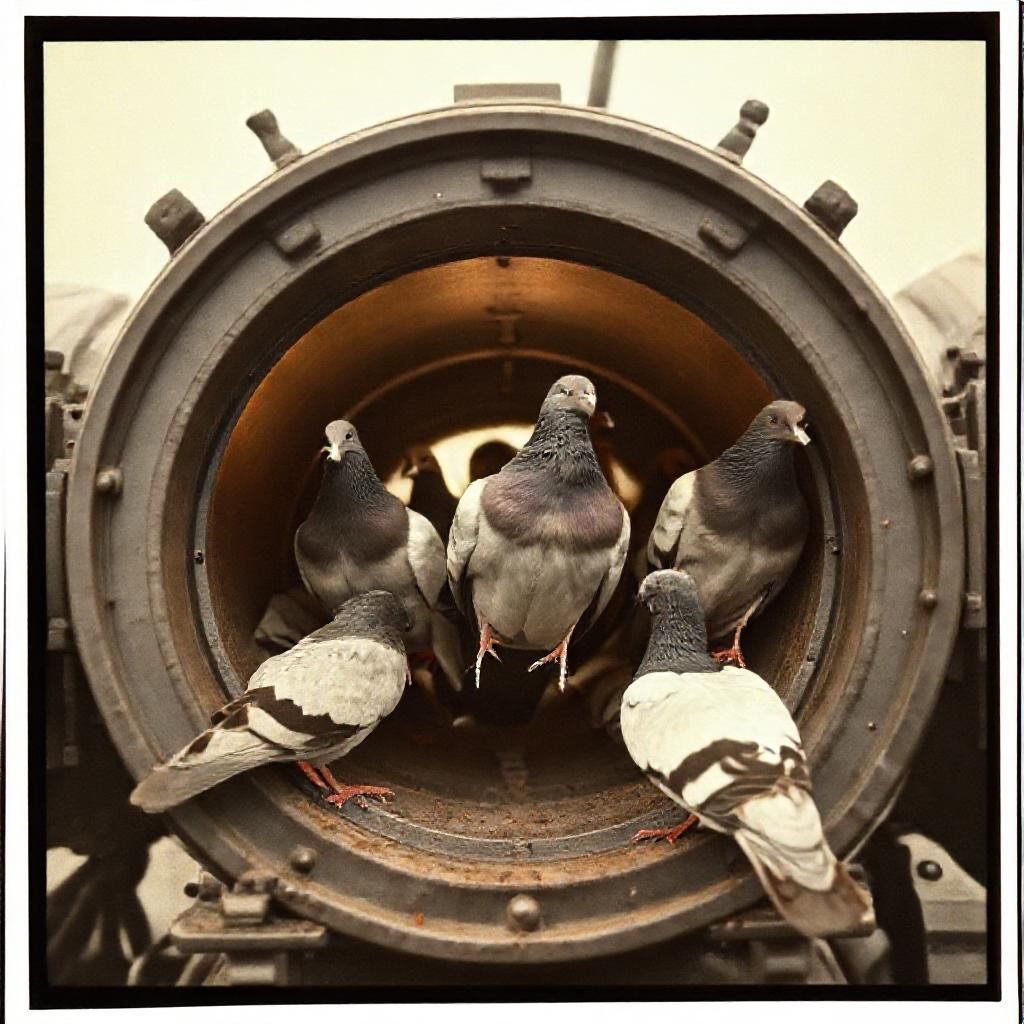
### From Pigeons to Precision: How WWII Inspired Modern AI Breakthroughs
When we think of the technological leaps that have shaped our modern world, the image of pigeons pecking inside a warhead might not be the first thing that comes to mind. Yet, during World War II, a groundbreaking project led by the renowned psychologist B.F. Skinner tapped into the intelligence of pigeons to improve bomb accuracy. This unusual experiment not only aimed to reduce wartime destruction but also laid some of the conceptual foundations for today’s artificial intelligence.
#### The Genius of B.F. Skinner
In 1943, as physicists were hard at work on the Manhattan Project, B.F. Skinner embarked on a less publicized but equally ambitious venture. His goal was to enhance the precision of conventional bombs, a necessity in an era when hitting targets accurately could significantly alter the course of battles. Skinner’s approach was unconventional; he proposed using pigeons to guide bombs to their targets.
How did it work? The pigeons were trained to peck at a target image projected inside the bomb’s nose cone. By pecking at the image, they could adjust the fins of the bomb and thus direct it toward the intended target. This project, though never used in combat, was a testament to Skinner’s innovative thinking and his understanding of animal behavior.
#### A Legacy in AI
Fast forward to today, the principles of conditioning and behavior that Skinner explored with his pigeons are echoed in the development of machine learning and AI. Concepts such as reinforcement learning, where algorithms are trained to make decisions by receiving rewards or penalties, have roots in the same behavioral psychology Skinner championed.
Reinforcement learning is now a cornerstone of AI, enabling machines to learn complex tasks such as playing games, driving cars, or even optimizing logistics. Just as Skinner’s pigeons learned to peck at targets, modern AI systems learn to make decisions that maximize a given objective, refining their actions through trial and error.
#### From War to Peace
The story of Skinner’s pigeons is a reminder that the seeds of innovation can sprout in the most unexpected places. What began as a wartime project has contributed to a technological revolution with far-reaching implications in fields as diverse as healthcare, transportation, and entertainment.
As we continue to develop AI technologies, it’s essential to remember the lessons of the past. The quest for precision and efficiency that Skinner pursued is mirrored in today’s AI efforts, pushing us to consider not only what technology can achieve but how it can be used responsibly and ethically.
In an era where AI is often viewed through the lens of futuristic sci-fi, it’s fascinating to reflect on its more humble beginnings—where a simple pigeon once guided the path to progress.
—
By exploring the past, we gain a unique perspective on the present and a clearer vision for the future. So next time you marvel at the capabilities of AI, take a moment to thank the pigeons that helped get us here.
Leave a Reply