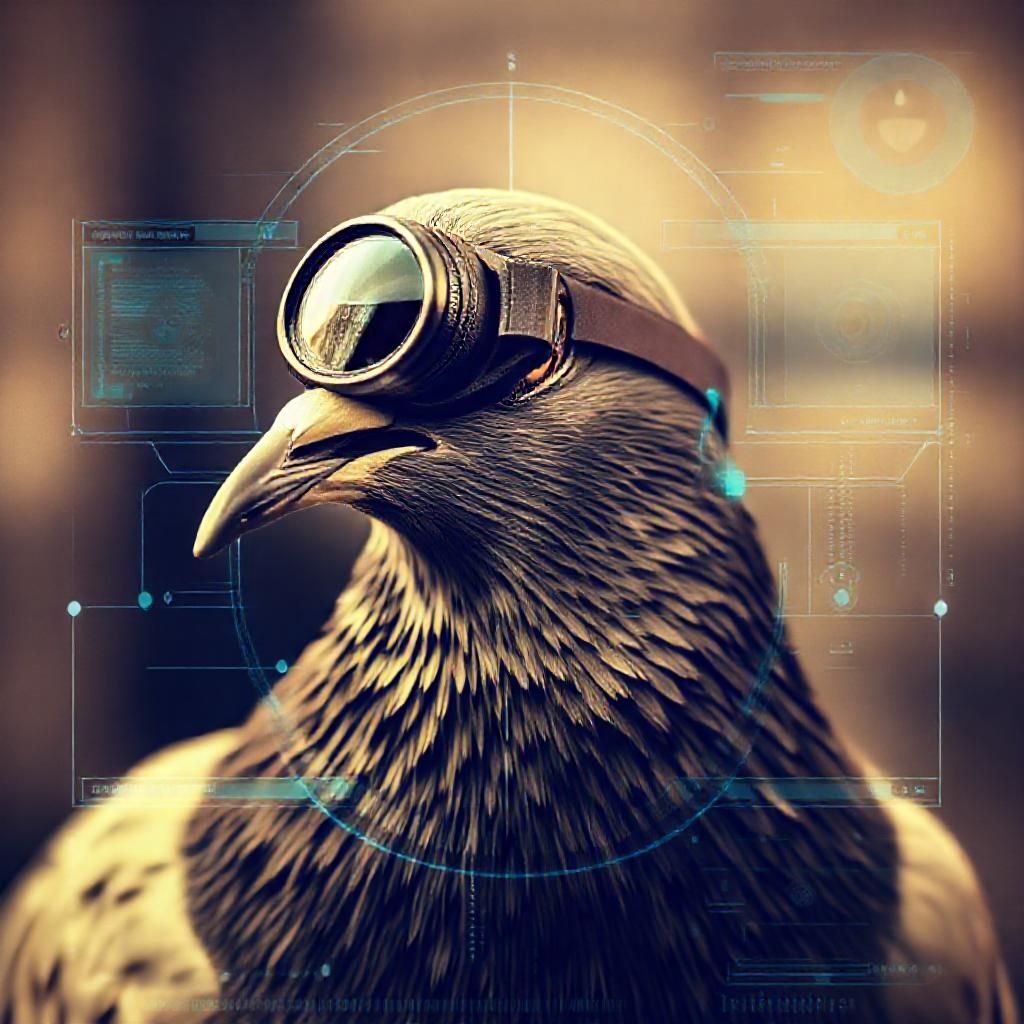
# How Pigeons Paved the Way for Modern AI Innovations
In the realm of technological evolution, inspiration often comes from the most unexpected sources. In the throes of World War II, while physicists in the Manhattan Project were splitting atoms, American psychologist B.F. Skinner was engaged in a different kind of innovation. Instead of creating more destructive weapons, Skinner’s mission was to make existing bombs more precise. His unlikely collaborators? Pigeons.
## A Feathered Solution to Precision Bombing
B.F. Skinner, known for his work in behavioral psychology, envisioned a novel guidance system for bombs, using pigeons. The project, aptly named Project Pigeon, aimed to harness the birds’ ability to recognize shapes and patterns to steer bombs towards their targets. Skinner trained pigeons to peck at a target image, which would adjust the bomb’s trajectory, making it more accurate.
This might sound like an avian fantasy, but the concept was rigorously tested. Skinner’s pigeons were placed in the nose cones of bombs, pecking at images displayed on a small screen. The pigeons’ pecks were translated into electronic signals that guided the bomb towards its target. Although Project Pigeon was ultimately shelved in favor of emerging electronic guidance systems, it demonstrated the potential of biological systems in technological applications.
## From Feathered Guides to Artificial Minds
While Skinner’s project did not see combat, its legacy lives on in the way we think about problem-solving and machine learning. The concept of using simple, repetitive tasks to train a system is foundational in AI. Modern artificial intelligence systems learn through exposure to vast datasets, recognizing patterns much like Skinner’s pigeons did.
Today, machine learning algorithms power everything from search engines to self-driving cars. The principles that Skinner explored with pigeons echo in how these systems are trained—through reinforcement learning, a method that rewards correct actions, akin to Skinner’s operant conditioning.
## The Broader Impact on Modern Technology
The ingenuity of Project Pigeon highlights an essential truth in technological advancement: innovation often requires thinking outside the box, or in this case, the coop. By looking to nature and seemingly simple organisms, we’ve unlocked complex solutions that drive today’s technological landscape.
AI continues to evolve, with recent advances in neural networks and deep learning pushing the boundaries of what’s possible. As we marvel at these innovations, it’s worth remembering that sometimes, the seeds of groundbreaking technology are planted in the most unassuming of places.
## Conclusion
The story of Skinner and his pigeons is a testament to the unconventional paths that can lead to technological breakthroughs. It reminds us that inspiration can come from anywhere, and that the past often holds the key to future innovations. As AI continues to shape our world, we owe a nod of gratitude to the humble pigeon and the visionary who saw potential in nature’s flighty navigators.
Leave a Reply