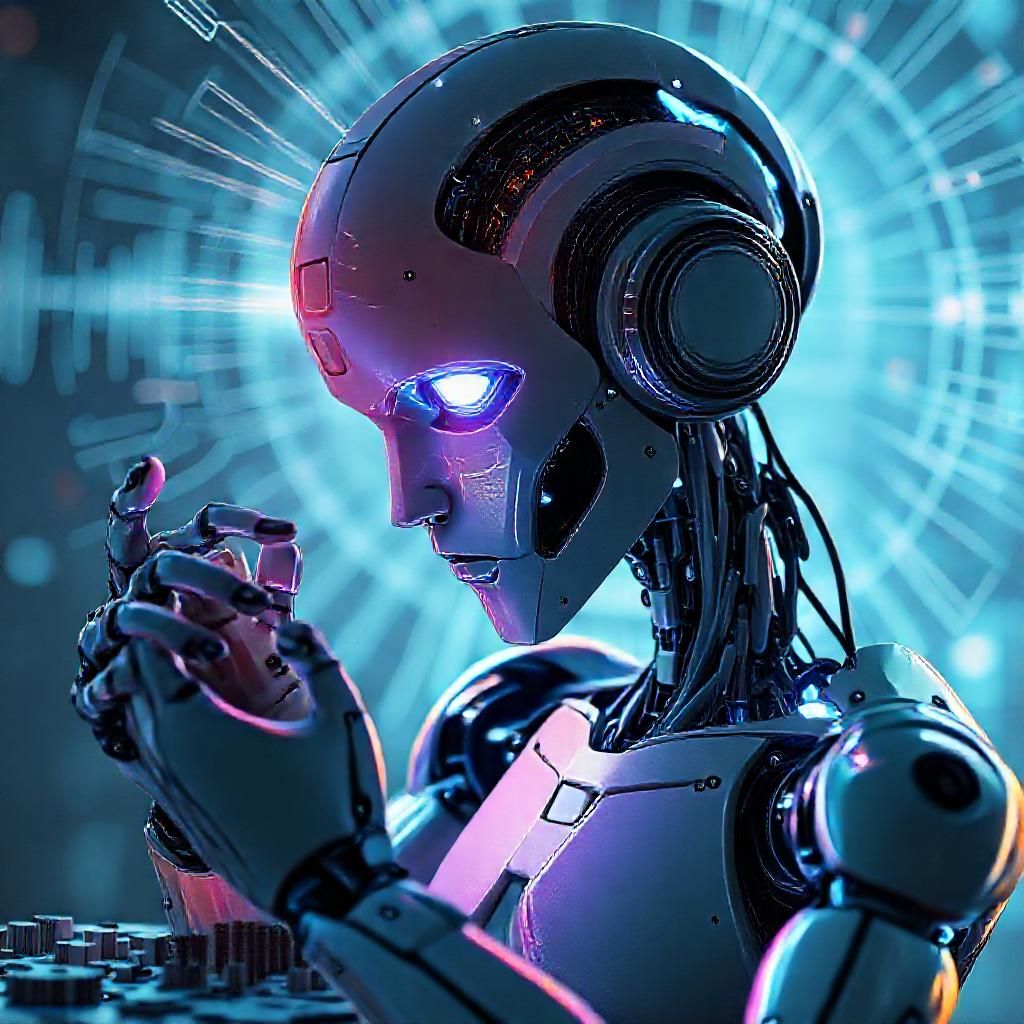
# Cracking the Code: The Quest for Artificial General Intelligence
Imagine a world where computers can not only beat you at chess but also understand and appreciate the nuances behind your favorite novel. This scenario captures the essence of what researchers aim to achieve with Artificial General Intelligence (AGI) – a level of AI that rivals human cognitive abilities across all domains. However, despite the rapid advancements in AI, the road to AGI is filled with complex challenges and intriguing questions.
## The Current State of AI
Today’s AI is incredibly proficient in specialized tasks. From identifying patterns in vast datasets to generating human-like text, AI tools like OpenAI’s GPT-4 and Google’s DeepMind have shown remarkable capabilities. They can assist in discovering new drugs by predicting molecular interactions or even help developers by writing code snippets. Yet, when faced with simple puzzles or tasks that require common sense reasoning, these models falter.
This limitation highlights the fundamental difference between narrow AI, which excels in specific tasks, and the broader goal of AGI, which would require an AI to exhibit the flexible thinking and adaptability of the human mind.
## Why is AGI So Challenging?
The challenge of creating AGI lies in replicating the depth and breadth of human cognition. Humans can draw upon a rich tapestry of experiences and adapt to new situations with ease. For AI to reach AGI, it must overcome several technical hurdles:
1. **Understanding and Contextualizing Information**: While AI can process vast quantities of data, understanding context and meaning remains elusive. Human cognition involves intuitive leaps and abstract reasoning that are difficult to encode algorithmically.
2. **Transfer Learning**: Humans naturally transfer knowledge from one domain to another. AGI would need to seamlessly apply learning from one task to benefit different, unrelated tasks.
3. **Common Sense Reasoning**: Despite advances, current AI systems lack a foundational understanding of the world akin to a child’s level of common sense and reasoning.
## Pathways to AGI
Several approaches are being explored to bridge the gap toward AGI:
– **Neuromorphic Computing**: By emulating the architecture of the human brain, neuromorphic computing aims to create machines that process information in a human-like manner.
– **Reinforcement Learning**: This technique allows AI to learn through trial and error, much like humans do. It holds promise for developing systems that can adapt and improve over time.
– **Collaborative AI**: By integrating AI with human input, systems can leverage human intuition and creativity, potentially accelerating the path to AGI.
## The Future of AGI
While AGI remains a distant goal, the pursuit of it is reshaping our understanding of intelligence itself. The journey to AGI will likely lead to innovations that benefit society, even if true AGI remains elusive for now. As researchers continue to explore the depths of machine learning and cognitive science, the dream of AGI serves as a powerful catalyst for technological and intellectual advancement.
In pondering the future, one thing is certain: the quest for AGI will continue to challenge and inspire, pushing the boundaries of what machines can achieve. Whether AGI becomes a reality or remains an aspirational target, its pursuit will undoubtedly shape the trajectory of AI research for years to come.
Leave a Reply