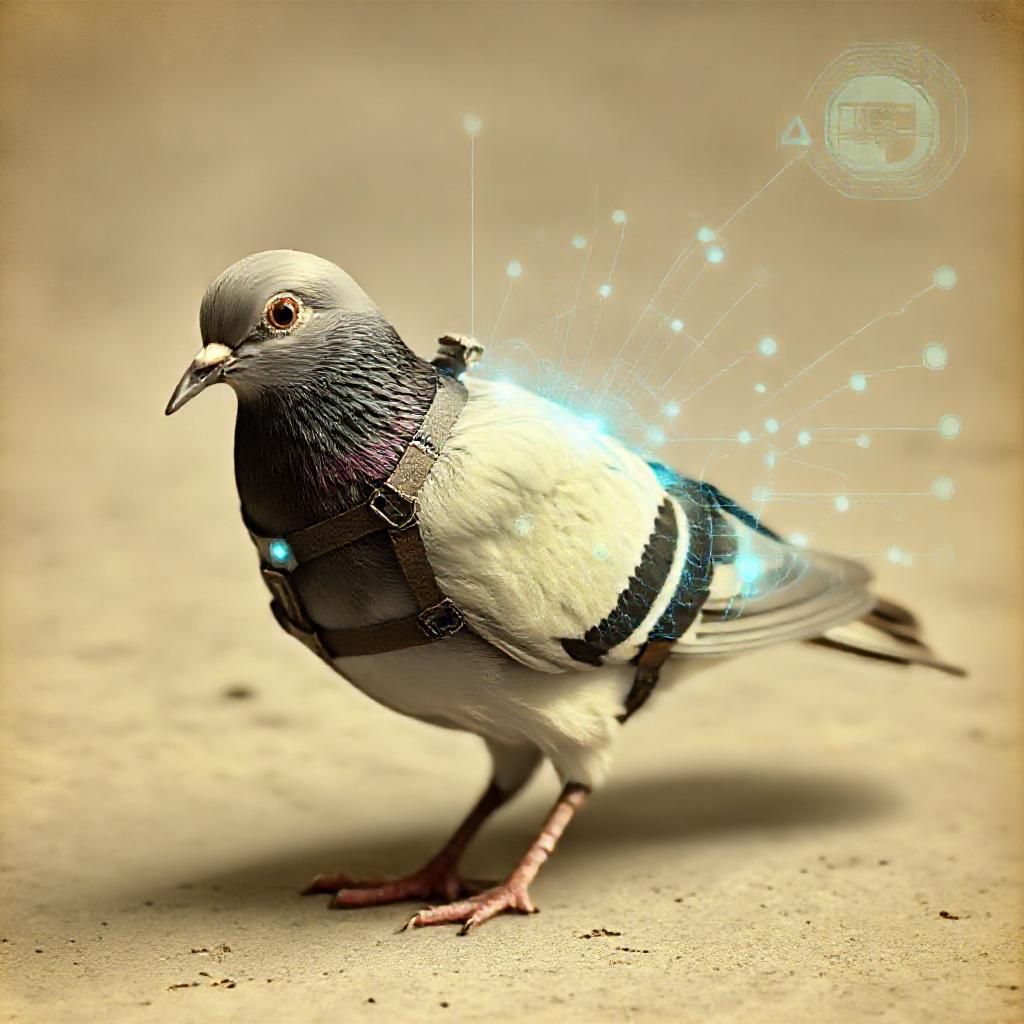
### From Pigeons to Precision: How Bird-Brained Ideas Shaped Modern AI
When you think of pigeons, you might picture city parks or old-town squares. However, these ubiquitous birds once played a surprising role in shaping the technological landscape that would eventually give rise to modern artificial intelligence. This story begins in 1943, amidst the backdrop of World War II, with a psychologist named B.F. Skinner.
While the world watched physicists split atoms, Skinner was working on a secret government project with a simpler aim: to make bombs more accurate. The twist? His precision guidance system relied on pigeons. Skinner’s idea was to train pigeons to peck at a target on a screen, guiding the bomb to its destination. This seemingly far-fetched concept was part of Project Pigeon, which sought to harness the natural abilities of these birds for military applications.
### The Birth of an Unconventional Idea
B.F. Skinner, renowned for his work in behaviorism, understood the power of operant conditioning—training subjects through rewards and reinforcements. He proposed that pigeons, with their keen vision and ability to be trained, could be conditioned to recognize and peck at ship silhouettes on a screen. These peckings would then adjust the bomb’s trajectory towards the target.
Although Project Pigeon never saw action due to technological advancements in electronic guidance systems, it was an early exploration into using biological systems for data processing—a precursor to artificial intelligence.
### From Avian Eyes to Artificial Intelligence
While Skinner’s project was shelved, the concept of biomimicry in technology persisted, laying the groundwork for future AI research. The core idea that a biological entity could process information and guide machinery was revolutionary. Fast forward to today, and we see echoes of this in machine learning where algorithms ‘learn’ from data much like Skinner’s pigeons learned from training.
Modern AI systems, such as neural networks, are inspired by the human brain’s structure. These systems process data, identify patterns, and make decisions, much like Skinner’s pigeons were trained to do. In essence, the project highlighted the potential of using living organisms’ capabilities as a template for developing intelligent machines.
### Why Skinner’s Pigeons Matter Today
Skinner’s pigeon project serves as a quirky yet insightful reminder of how unconventional thinking can lead to technological breakthroughs. It encourages us to look beyond traditional solutions and explore the potential of integrating biological insights into technological advancements.
As AI continues to evolve, understanding its historical roots helps in appreciating the cross-disciplinary innovations that have propelled this field. While Skinner’s pigeons might seem like a flight of fancy, they undeniably contributed to the legacy of AI, teaching us that sometimes, the simplest ideas can inspire the most profound innovations.
### Conclusion
The next time you see a pigeon perched atop a city building, remember the pivotal role these birds once played in a story that bridged the gap between nature and technology. It’s a testament to human ingenuity and the limitless possibilities when we dare to think outside the box—sometimes, even outside the coop.
Leave a Reply