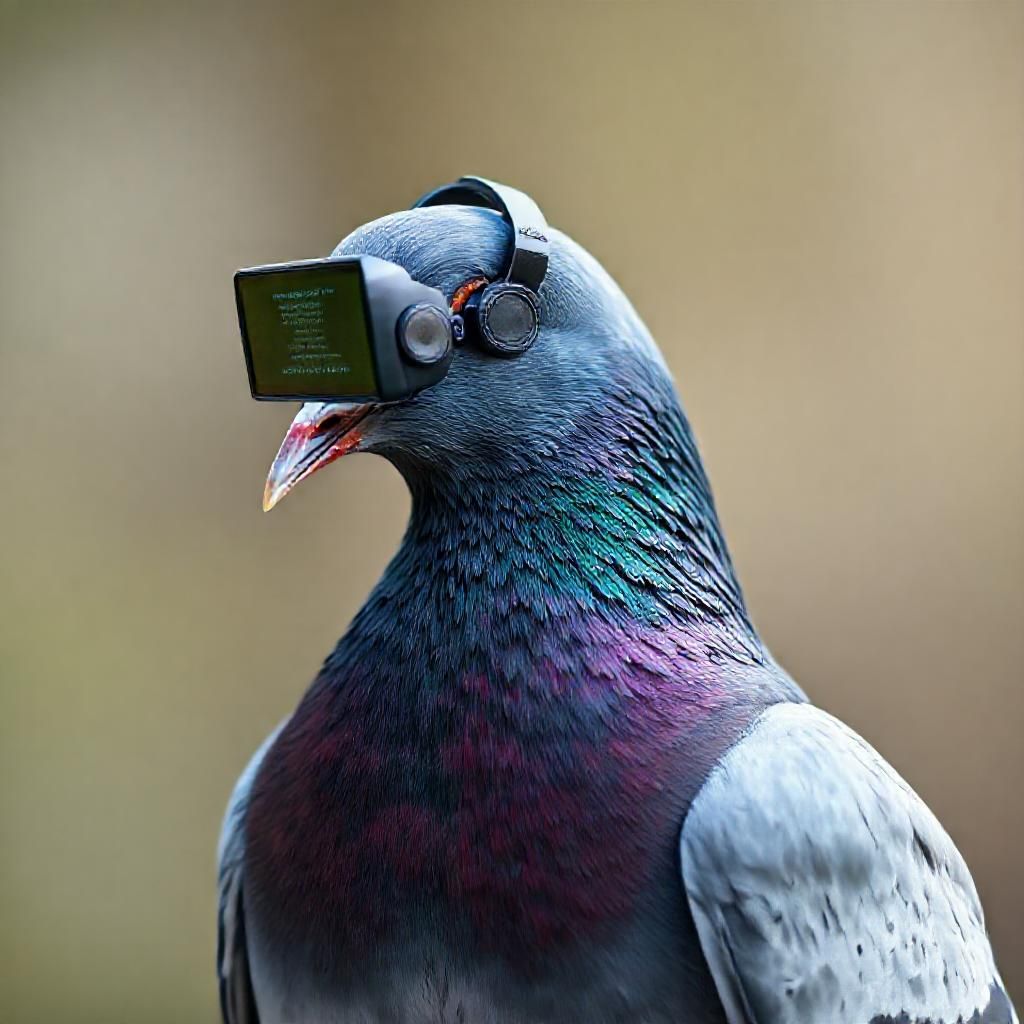
# From Pigeons to AI: The Unexpected Journey to Precision
In the annals of history, technological breakthroughs often come from unexpected sources. One such story begins not in a cutting-edge lab filled with computers, but in a time when pigeons were set to revolutionize warfare. Welcome to the 1940s, a period where B.F. Skinner, a prominent American psychologist, embarked on a secret mission to improve military precision using these feathered friends. While the world was fixated on the explosive power of the atomic age, Skinner envisioned a different path to victory – precision.
## The Pigeon Project
During World War II, Skinner proposed an innovative idea to the U.S. government: train pigeons to guide bombs. Yes, real pigeons! His concept was simple yet ingenious. Pigeons, with their excellent vision and ability to follow specific patterns, could be trained to peck at a target image on a screen. These pecks would then adjust the bomb’s trajectory, ensuring it hit its mark with unprecedented accuracy.
Skinner’s project, though never implemented in actual combat, laid the groundwork for the idea of using animals in technological systems. This concept of harnessing biological systems for precision tasks was a precursor to the development of artificial intelligence (AI) systems we use today.
## From Biological to Artificial Precision
Fast forward to the present, and the principles behind Skinner’s pigeons have found new life in AI algorithms. Modern AI systems rely heavily on pattern recognition, a trait pigeons were being trained for in the 1940s. Just like the birds were guided to recognize specific targets, today’s AI models are trained to identify patterns within vast datasets, driving innovations in fields ranging from autonomous vehicles to medical diagnostics.
### The Evolution of AI Training
AI training has evolved significantly since the days of pigeon-guided missiles. Now, machine learning models are the backbone of AI development. These models learn from thousands or even millions of data points, adjusting their parameters to improve accuracy over time. This learning process is reminiscent of Skinner’s behavioral conditioning methods, albeit on a much grander and more complex scale.
Moreover, the concept of reinforcement learning – a core component of modern AI – mirrors the way Skinner’s pigeons were trained. In reinforcement learning, algorithms are rewarded for making correct decisions and penalized for errors, gradually refining their decision-making process. This methodology is strikingly similar to the reward-based system Skinner used to train his avian students.
## A Legacy of Precision
While pigeon-guided bombs might sound like a quirky footnote in history, Skinner’s project represents a critical stepping stone in the evolution of precision technology. Today, AI systems are tasked with critical precision work, from surgical robots performing delicate procedures to AI-driven navigation systems ensuring safe travel.
In conclusion, the peculiar tale of pigeons in World War II serves as a reminder of the unconventional paths innovation can take. As we continue to push the boundaries of AI, it’s worth acknowledging the unexpected contributions that have led us here. Who knew that pigeons, of all creatures, would play a part in shaping the technology of tomorrow?
Leave a Reply