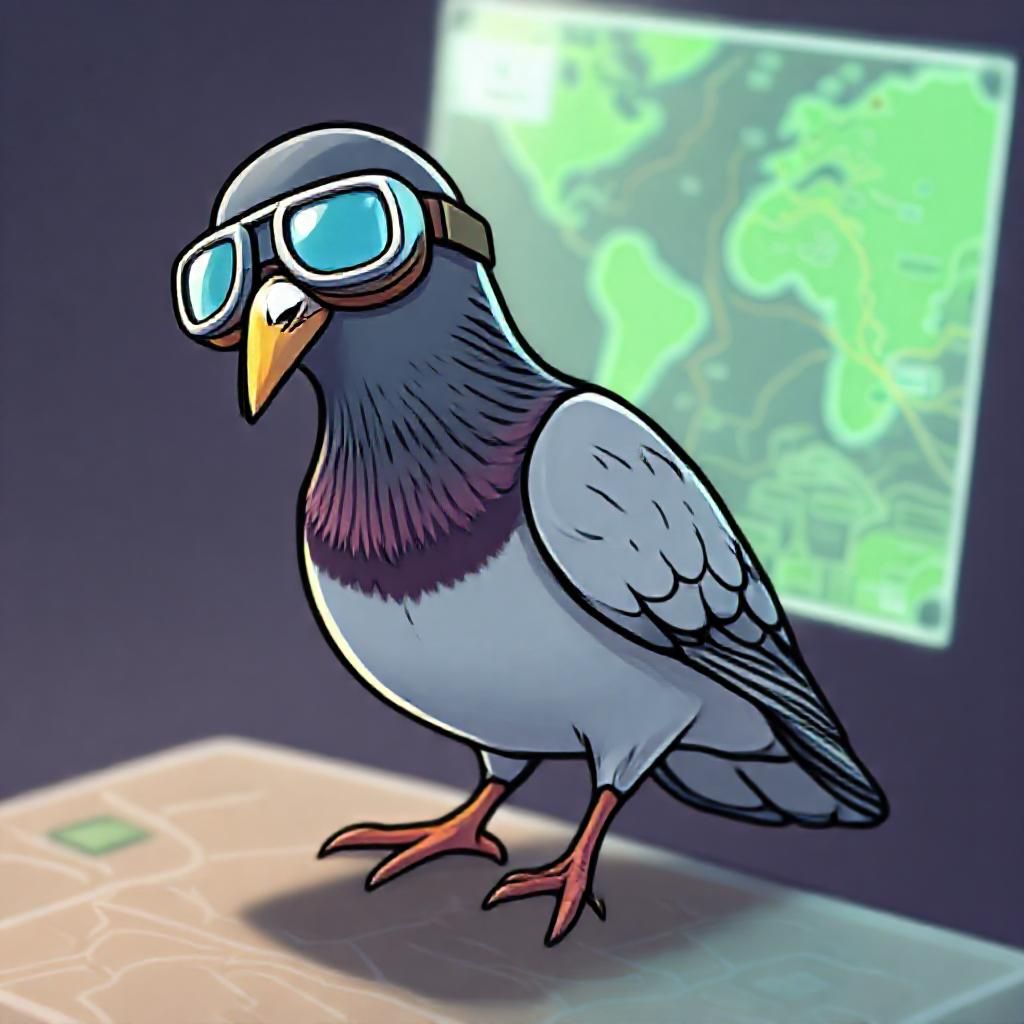
### The Feathered Pioneers: How Pigeons Paved the Way for AI Innovations
In the midst of World War II, while physicists were busy splitting atoms to create the world’s first nuclear weapons, one American psychologist was pioneering a completely different kind of technological advancement. B.F. Skinner, renowned for his work in behaviorism, embarked on a secret project that, at first glance, seemed more whimsical than world-changing. His objective? To train pigeons to guide bombs with precision.
Skinner’s project, often overshadowed by more explosive wartime innovations, was a part of a broader effort to increase the accuracy of conventional weapons. Unlike the destructive power of the atom bomb, Skinner’s vision was to harness intelligence, albeit avian, to make existing weapons smarter. The project was codenamed “Project Pigeon,” and it involved training pigeons to peck at a target image, thereby guiding bombs to their targets with remarkable accuracy.
While the project never saw combat action, it laid an intriguing groundwork for future technological innovations. The concept of using biological processes as a model for technological development is now a cornerstone of artificial intelligence research. Skinner’s work with pigeons can be seen as an early exploration into what would eventually evolve into machine learning and AI.
Fast forward to today, and AI systems are trained using vast datasets, learning to recognize patterns and make decisions, much like Skinner’s pigeons pecking at their targets. This method of learning by example is fundamental to modern neural networks, the backbone of AI that powers everything from speech recognition systems to autonomous vehicles.
Moreover, the idea of using animals to inspire technological advancements isn’t limited to Skinner’s pigeons. Bio-mimicry is a rapidly growing field where nature’s solutions to problems are used to inspire innovative technologies. From the aerodynamic design of the Shinkansen bullet train, inspired by the kingfisher’s beak, to robotic arms modeled after an elephant’s trunk, we continue to see nature’s influence in modern tech.
B.F. Skinner’s Project Pigeon, although never deployed, serves as a fascinating historical example of lateral thinking leading to technological advancement. It reminds us that innovation often comes from unexpected places, and sometimes, it takes the most ordinary creatures to inspire extraordinary progress. So next time you see a pigeon, remember, they are more than just city-dwelling birds; they are part of the lineage of technological pioneers that helped shape the world of AI as we know it today.
Leave a Reply