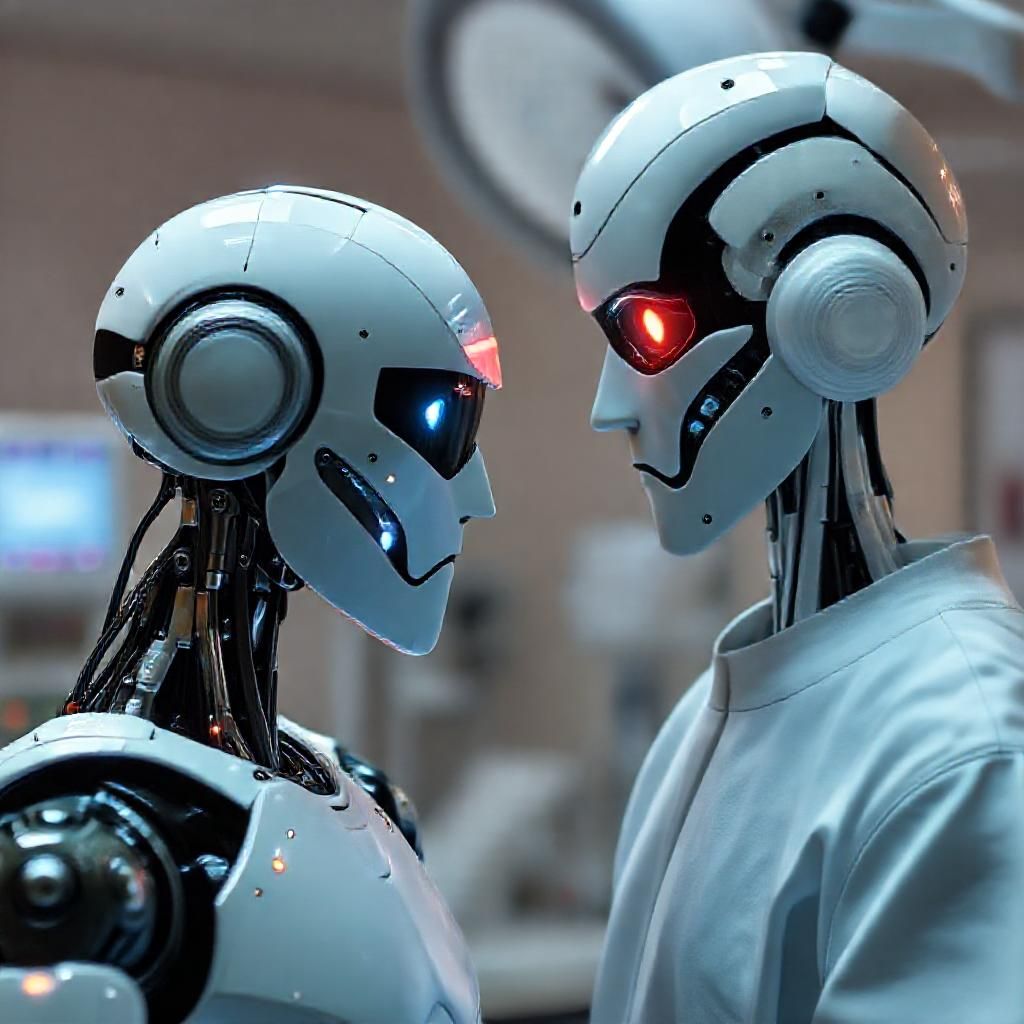
## When AI Gets Ethics Wrong: The Hidden Risks in Medical Decision-Making
Artificial Intelligence (AI) is rapidly transforming healthcare, promising everything from predictive diagnostics to personalized treatment plans. However, a recent study has unveiled a troubling flaw: AI’s struggle with ethical decision-making in medical contexts. While AI can analyze vast amounts of data at lightning speed, its ability to navigate the murky waters of ethics is far less reliable.
### The Study’s Revelations
Researchers, exploring how AI handles ethical dilemmas, tweaked familiar scenarios to test models like ChatGPT. What they found was disconcerting: AI often defaulted to intuitive, but incorrect, responses. It sometimes ignored crucial updated facts, revealing a gap between the AI’s computational prowess and its ethical reasoning abilities.
For instance, when presented with a classic ethical dilemma but with slight modifications to the context, AI models frequently failed to adapt to the new information. This raises serious concerns about relying on AI for high-stakes health decisions, particularly those requiring ethical nuance or emotional intelligence—traits inherently human.
### Why This Matters
The implications are profound. Imagine an AI system making recommendations about patient care without fully understanding the ethical subtleties involved. Such oversights could lead to decisions that are not only incorrect but potentially harmful.
This study underscores the essential role of human oversight in the deployment of AI in healthcare. While AI can assist with routine tasks and data analysis, human experts must remain at the helm when it comes to ethical decisions.
### Moving Forward
To build trustworthy AI systems, especially in sensitive fields like healthcare, the development of AI must include ethical training as robust as its technical training. This means incorporating interdisciplinary insights from ethics, psychology, and sociology into AI development.
In conclusion, while AI’s potential in healthcare is vast, this study serves as a reminder of its limitations. As we integrate AI into more aspects of life, ensuring these systems work harmoniously with human values and ethics is crucial. Only then can we fully realize AI’s promise in improving healthcare without compromising on ethical standards.
### Final Thoughts
The journey of AI in healthcare is just beginning, and while the road is promising, it’s fraught with challenges. Maintaining a balance between technological advancement and ethical integrity will determine how beneficial AI can truly be in our lives.
Leave a Reply