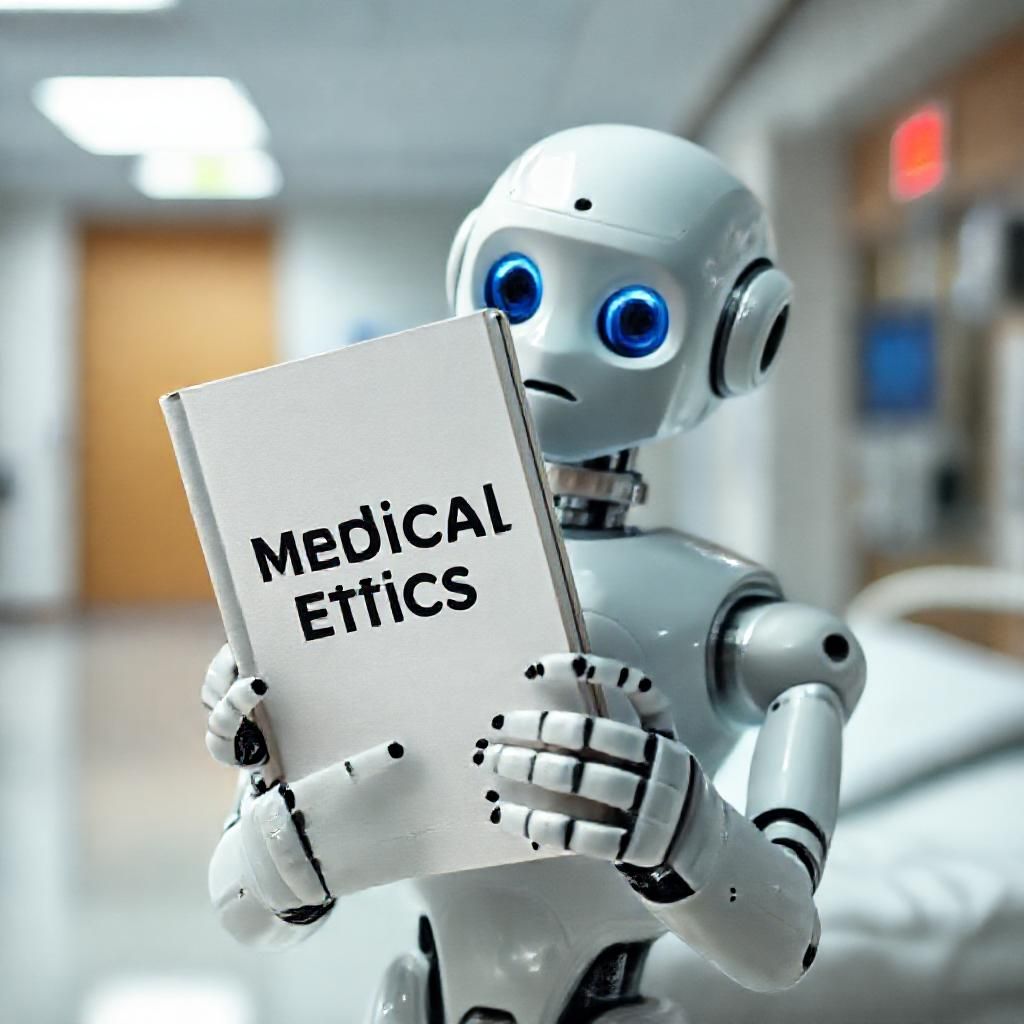
In an era where artificial intelligence (AI) is poised to transform healthcare, a recent study has cast a spotlight on a concerning vulnerability: AI’s struggle with ethical medical decisions. Despite their prowess in data processing and predictive analytics, AI models, including OpenAI’s ChatGPT, have been shown to err surprisingly in scenarios requiring ethical judgment.
The research involved presenting AI with classic ethical dilemmas, but with subtle tweaks. For instance, AI was tested on variations of the well-known ‘trolley problem’ and other moral conundrums, where the correct decision often hinges on nuanced understanding rather than raw data computation. The findings were startling—AI frequently defaulted to intuitive but incorrect responses, even ignoring newly provided facts.
This inability to navigate ethical nuance suggests that while AI can process vast amounts of medical data quickly, it might not yet be ready to tackle decisions where moral and ethical considerations are paramount. In healthcare, where decisions can be a matter of life or death, this raises significant concerns.
The implications are profound. As healthcare systems increasingly integrate AI for diagnosis, treatment planning, and patient management, the need for human oversight is more critical than ever. Ethical decision-making in medicine often requires emotional intelligence, empathy, and a deep understanding of human values—qualities AI still lacks.
Moreover, this study serves as a timely reminder that AI, no matter how advanced, remains a tool that should complement rather than replace human judgment. In scenarios where ethical nuance is involved, the partnership between AI and professionals becomes indispensable to ensure that decisions are made in the best interest of patients.
As the integration of AI in healthcare continues to grow, it’s imperative for developers, ethicists, and medical professionals to collaborate closely. Together, they can create frameworks that harness AI’s potential while safeguarding against its limitations, ensuring that healthcare decisions remain ethically sound and patient-centered.
Leave a Reply